The Short Answer
Choose roman shades when you want fabric on the window without giving up wall space or floor: a bedroom, a dining room, a kitchen, any window with furniture beneath it. Choose curtains when the ceiling is tall, the wall is wide, and you want the room to feel dressed and finished from floor to ceiling. In a Toronto condo with nine foot ceilings a lined roman is usually the right call; in a house with ten foot ceilings or a suite with a full wall of glass, made to measure curtains on a track, often over a screen roller, are what the room is asking for.
Key Takeaways
- A roman shade is fabric that lives inside the window. Curtains are fabric that lives on the wall. That is the whole decision.
- Both can be fully blackout lined. Both can be motorized. Neither is the cheap option, and neither should be bought off a shelf.
- Curtains need drop, width and stacking room. Roman shades need none of it, which is why they win in smaller rooms.
- The layered answer on a wall of glass is a screen roller for the day and lined curtains for the night.
Every room in this city that is not a bathroom eventually wants something softer than a roller. The question is whether that softness should sit inside the window or beside it. That is the real difference between a roman shade and a curtain, and once you see it that way the choice for most rooms is quick. Here is how we make it at your window, and where each one earns its price.
What a roman shade actually is
A roman shade is a flat panel of fabric that folds up into neat horizontal pleats as it rises and hangs flat as a panel when it is down. It mounts inside the frame or just above it, takes up no wall, no floor and no stacking space, and can be lined for privacy or fully lined for blackout. Ours are lined and, where the fabric needs it, interlined, so they hang flat and fold cleanly for years rather than months.
What curtains actually are
Curtains are panels of fabric hung from a rod or a track above and beyond the window, falling to the floor and drawing to the sides. They dress the wall as much as the glass. Made properly they are cut to the exact drop, so they kiss the floor rather than stopping short, and made to a width that lets them stack clear of the glass when open so you keep the whole view.
Roman shades vs curtains: the comparison we give clients
- Space: Roman wins. It lives inside the window. Curtains need wall on both sides to stack and a clear run of floor beneath.
- Ceiling height: Curtains win on tall ceilings, where floor to ceiling fabric makes a room feel grand. Under nine feet a roman keeps the room from feeling crowded.
- Blackout: Even. A blackout lined roman inside the frame is as dark as a lined curtain that overlaps the frame generously. Both beat any unlined option.
- Furniture under the window: Roman. A bed, a sofa or a desk against the glass makes curtains impractical and a roman effortless.
- The view: Curtains, when made wide enough to stack fully clear. A roman always leaves a folded band at the top of the glass.
- Sliding doors and balconies: Curtains, on a track. A roman cannot get out of the way of a door.
- Price: Roman shades are generally less per window because there is less fabric. Curtains use the most cloth of anything we make and the track and lining add to it.
The room by room answer
Bedrooms: roman, blackout lined
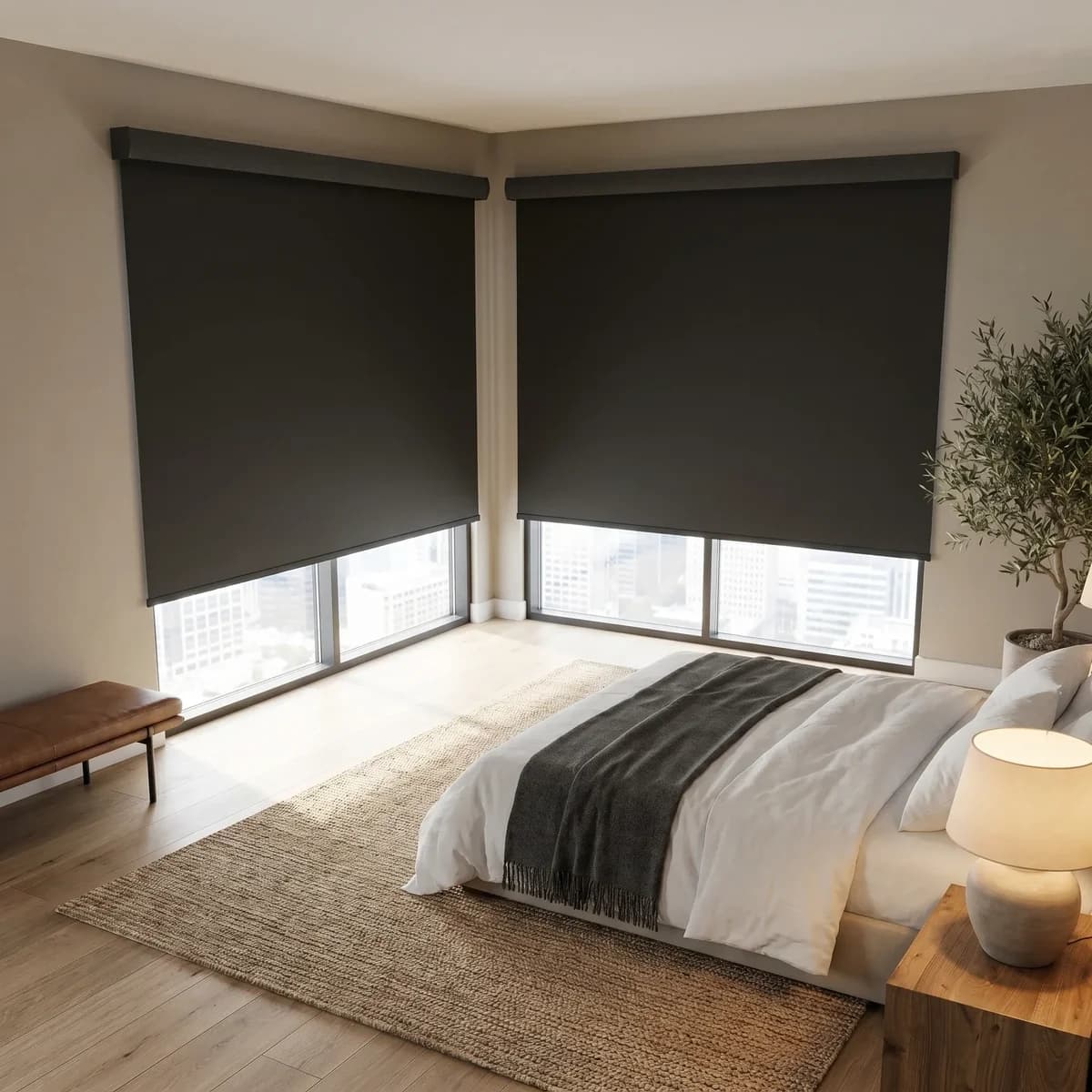
The bed is usually under or beside the window, and you want dark. A blackout lined roman inside the frame gives you fabric, softness and a dark room without a panel brushing the nightstand. If the ceiling is tall and there is wall to spare, lined curtains over a blackout roller are the more luxurious version of the same idea. Our blackout guide goes deeper.
Living rooms: curtains, over a screen roller
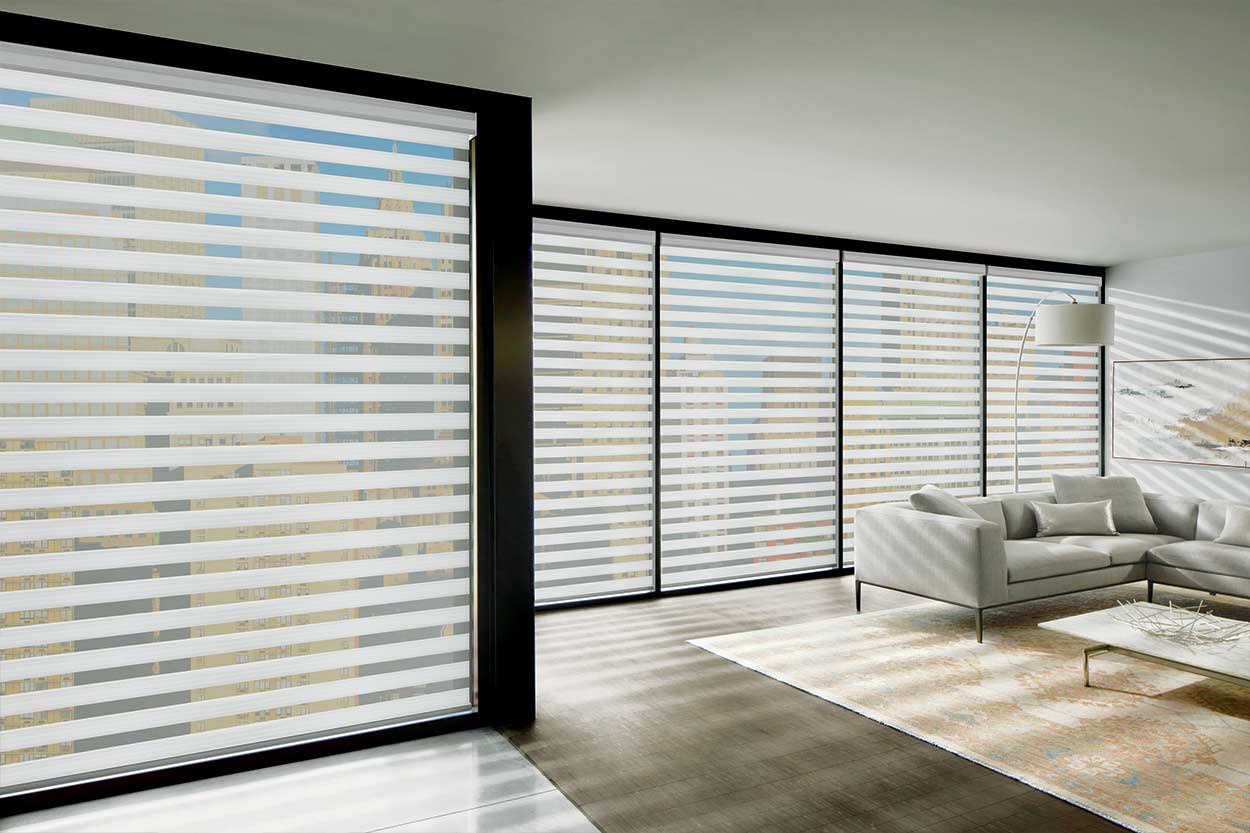
The living room wall of glass is where curtains belong, and where the layered answer is best. A screen roller handles the afternoon sun and keeps the view; the curtains close after dark and finish the room. Motorize the track and the whole wall draws on a sunset schedule.
Dining rooms: either, and this is where fabric matters most
A dining room is used at night, under warm light, and fabric does more for it than anywhere else in the home. A tailored roman in a linen or a textured weave is quietly elegant. Curtains to the floor make the room an occasion. We bring both to your table, literally.
Kitchens and small windows: roman
Nothing to catch a chair or a counter, wipeable fabrics available, and a finished look on a window that is usually forgotten.
The mistakes we are called in to fix
- Curtains that stop short. Panels bought in a stock length that hover above the floor. We cut to your drop, to the centimetre.
- Curtains too narrow to stack. Panels that cover half the glass even when open, because nobody measured the wall. We size them to clear the window entirely.
- Unlined romans. A pretty fabric that glows orange at noon and shows every fold in shadow. We line every roman as standard.
- Rods that sag. A big box rod on two brackets across an eight foot span. We fit tracks and rods rated for the weight, into the header, with the brackets the span needs.
Motorized tracks and cordless lifts
Curtains on a motorized track are the most theatrical thing we install: a wall of fabric that draws itself at dusk. Roman shades are available on a cordless lift or a motor, which in a home with children is the only way we fit them. Both meet the current Health Canada cord rules. Read about motorized blinds and the child safe rules if either is a consideration.
Why made to measure is the whole point with fabric
A roller that is slightly off is a light gap. A curtain that is slightly off is a room that looks wrong from the door: too short, too narrow, hung too low. Fabric is unforgiving of a stock size, which is exactly why it rewards a proper measure. We measure the wall, the ceiling, the floor and the window, and the pieces arrive cut to those numbers, hung by the person who took them. It is covered by the five year warranty, labour included.
“12 foot ceilings and I wanted real drapery, not something that stops short like the last place. They made the panels to the exact drop and put them on a motorized track.”
Questions People Ask
Frequently Asked
Are roman shades or curtains better for a condo?
Roman shades suit most condo rooms because they take no wall or floor space and work with furniture under the window. Curtains suit a wall of glass or a tall ceiling, usually layered over a screen roller.
Can roman shades be blackout?
Yes. A fully blackout lined roman mounted inside the frame is as dark as a lined curtain and is our usual bedroom recommendation.
Which is more expensive, roman shades or curtains?
Curtains, in most cases. They use the most fabric of anything we make and the track, lining and drop add to it. Roman shades are usually less per window.
Can curtains be motorized?
Yes. Curtains on a motorized track draw on a wall switch, a remote, a phone or a sunset schedule. Roman shades are available on a cordless lift or a motor as well.